Section 1.34 Crankshaft Timing Gear and Timing Wheel
The crankshaft timing gear is a helical gear that is indexed to the crankshaft by a key. It is pressed onto the end of the crankshaft. The inside diameter of the 12.7 liter engine crankshaft timing gear is slightly larger than the 11.1 liter engine gear. The current 12.7 liter engine gear can be identified by an "O" on the front face of the gear. See Figure
"Crankshaft Timing Gear and Related Parts"
.
Note: The former 12.7 liter engine gear had a groove on the front face.
1. Timing Gear, Crankshaft
4. Timing Wheel, DDEC II
2. 12.7L Gear
5. Timing Wheel, DDEC III
3. 11.1L Gear
6. Woodruff Key
7. Crankshaft
Figure 1. Crankshaft Timing Gear and Related Parts
The crankshaft timing gear directly drives the bull gear and oil pump drive gear. The bull gear drives the various accessories, and drives the camshaft through the idler gear. See Figure
"Engine Gear Train"
.
Figure 2. Engine Gear Train
A timing wheel is installed on the crankshaft directly behind the crankshaft timing gear. The timing wheel is indexed to the crankshaft by the same key as the crankshaft timing gear, and is retained to the crankshaft by the crankshaft timing gear. The timing wheel is marked with the word OUT on the outboard side, and should be installed with this mark facing you as you install the wheel. See Figure
"Crankshaft Timing Gear and Related Parts Location"
.
Figure 3. Crankshaft Timing Gear and Related Parts Location
The timing wheel induces a voltage signal in the Timing Reference Sensor (TRS), as the teeth of the pulse wheel passes by the TRS. This signal is sent to the Electronic Control Module (ECM) to determine injector firing.
Since the crankshaft and camshaft must be in time with each other, a series of timing marks are stamped or etched on the faces of the gears in the gear train. Refer to "1.24.2.1 Check Engine Timing"
for gear train timing information. The balance shafts and crankshaft must also be in time with each other.
The crankshaft timing gear is lubricated by splash from the engine oil pan, and excess oil returning to the oil pan from the other gears.
Section 1.34.1 Repair or Replacement of Crankshaft Timing Gear and Timing Wheel
If an oversize crankshaft front oil seal sleeve is used, peen the outside diameter of the sleeve until it stretches sufficiently and slip the sleeve off of the crankshaft. Discard sleeve.
Use care when removing the bull gear assembly. To prevent damaging the crankshaft oil seal contact surface, use Crankshaft Protector (J–35994)
on end of crankshaft or oil leaks may result.
Figure 5. Installation of Crankshaft Timing Gear Removal Tools
Note: The crankshaft removal values are shown with the crankshaft installed in the engine. The crankshaft timing gear may be removed with the crankshaft in or out of the engine.
Note: Considerable pressure is required to remove the crankshaft timing gear. Due to manufacturer's tolerances, it may take as much as 80 kN (9 tons) of force to remove the crankshaft timing gear.
Figure 9. Crankshaft Timing Gear Removal
Remove the tools from the engine and timing gear as follows:
Care should be exercised when removing the timing wheel. Do NOT use sharp tools to pry on the timing wheel. Damage to the crankshaft seal contact surface may cause oil leaks.
Slide the timing wheel off the end of the crankshaft.
Note: The timing wheel is a slip fit to the crankshaft, and no special tools are required for removal. A three-jaw adjustable puller, however, may be necessary.
Section 1.34.2.1 Inspection of Crankshaft Timing Gear and Timing Wheel
Inspect the crankshaft timing gear and timing wheel as follows:
Clean the crankshaft timing gear and timing wheel with clean fuel oil.
EYE INJURY
To avoid injury from flying debris when using compressed air, wear adequate eye protection (face shield or safety goggles) and do not exceed 276 kPa (40 psi) air pressure.
Dry all parts with compressed air.
Visually examine the gear teeth of the crankshaft timing gear for evidence of scoring, pitting, or excess wear.
Note: The 11.2 and 12.7 liter crankshaft gears have different inside diameters. The 12.7 L crank gear can be identified by a groove on the outer face of the gear. These gears cannot be interchanged.
Index the keyway of the timing wheel with the key in the crankshaft. Slide the timing wheel onto the crankshaft, with the word OUT on the timing wheel facing you, as far as it will go without forcing it. See Figure
"Timing Wheel Installation"
.
Figure 12. Timing Wheel Installation
Coat the bore of the crankshaft timing gear with a film of Lubriplate.
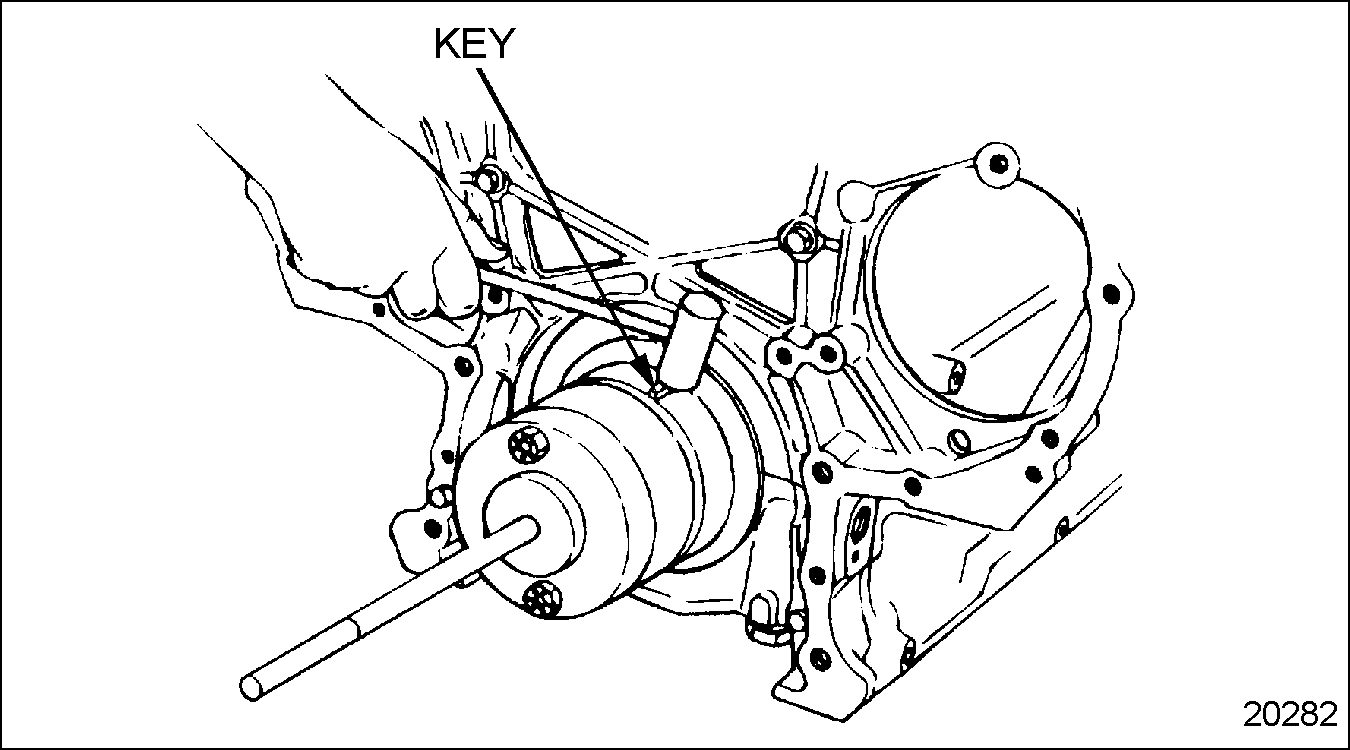
Index the keyway of the crankshaft timing gear with the Woodruff key in the crankshaft. Tap the gear with a plastic hammer or fiber mallet, to ensure that the key is started in the keyway. See Figure
"Crankshaft Timing Gear Indexing"
.
Install the three retaining nuts to the puller legs. Thread the nuts past the first set of threads on the legs. Slide the nuts past the unthreaded portion of the shafts, and engage the second set of threads. Tighten but do not torque the retaining nuts. See Figure
"Crankshaft Timing Gear Installation Tools"
.
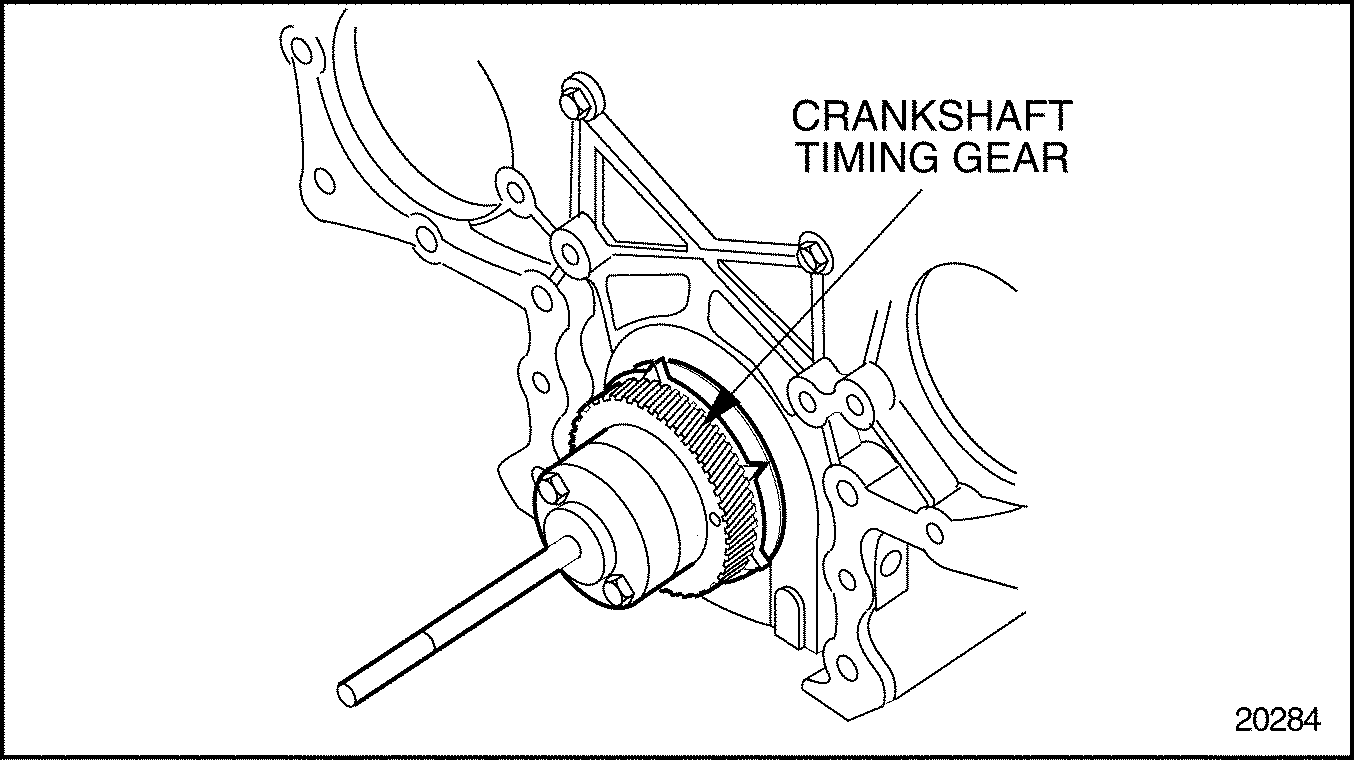
Close the valve on J–35951–175
. Work the pump handle to supply hydraulic pressure to the ram. Make sure that the slot in the crankshaft timing gear indexes with the key in the crank. Pump until the crankshaft timing gear is seated firmly against the timing wheel and the timing wheel is seated firmly against the crankshaft flange. See Figure
"Crankshaft Timing Gear Installation"
.
Note: A minimum force of 30 kN (3.37 tons) must be obtained when pressing the gear on the crankshaft.