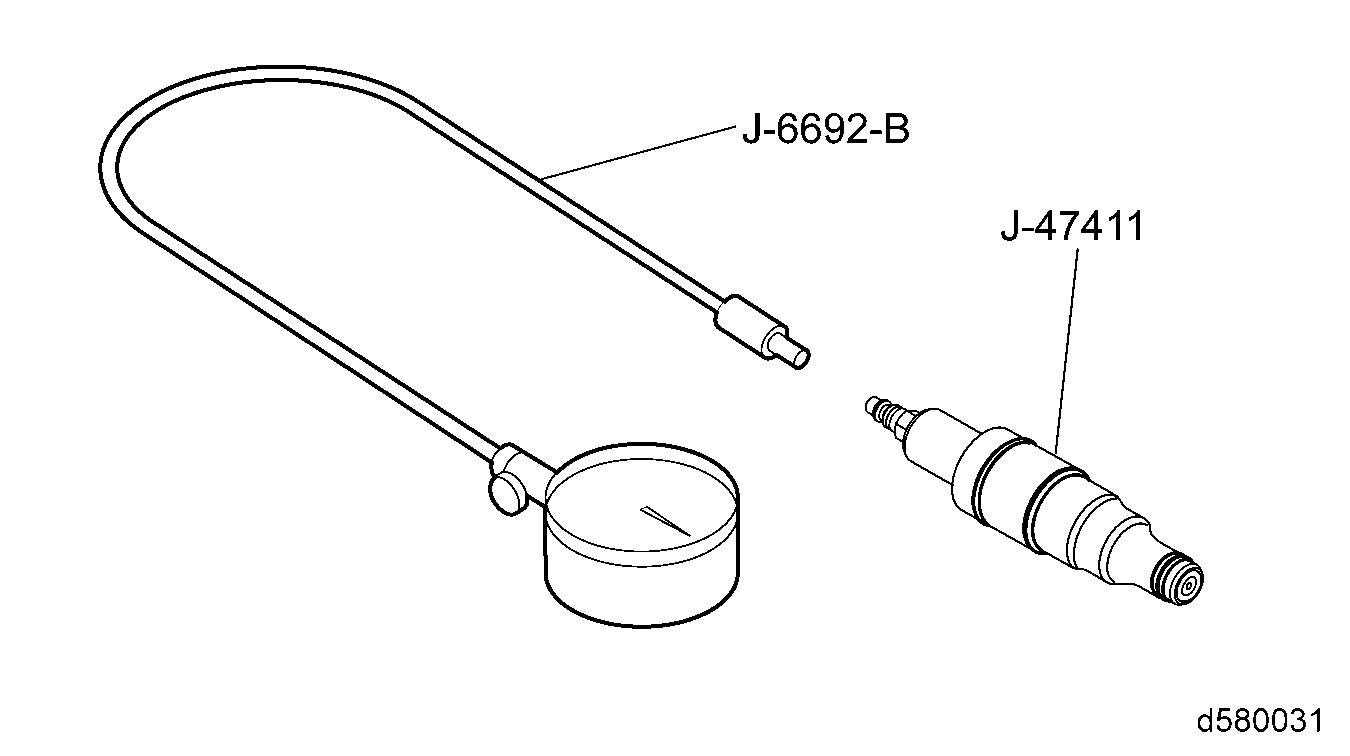
If a weak cylinder or low compression is suspected, perform the cylinder compression test using DDDL. If results indicate a weak cylinder, perform the manual compression test. Refer to "5.4.1 Cylinder Compression Test"
.
If low compression is found, check the following for possible causes of low compression:
Valve lash/valve train damage
Cam timing
Cylinder liner/ring damage
Injector hold downs and bolts
Blown head gasket
Cracked liner or head
Valve or seat damage
Missing/damaged injector seals
Repair any causes of low compression found using the EPA07 DD15 Workshop Manual
(DDC-SVC-MAN-0002). Once repairs are made, refer to "5.4.2 Verify Repairs"
.
Section 5.4.1 Cylinder Compression Test
Perform the following steps for a compression test on a DD15 Engine:
Note: First perform the cylinder compression test using DDDL. If results indicate a weak cylinder, perform the manual compression test.
Start and run the engine until normal operating temperature is reached. Stop the engine.
PERSONAL INJURY
To avoid injury when working on or near an operating engine, wear protective clothing, eye protection, and hearing protection.
PERSONAL INJURY
To avoid injury from hot surfaces, wear protective gloves, or allow engine to cool before removing any component.
Disconnect the batteries.
Remove rocker cover.
Remove both injector harnesses.
EYE INJURY
To avoid injury from flying debris when using compressed air, wear adequate eye protection (face shield or safety goggles) and do not exceed 276 kPa (40 psi) air pressure.
NOTICE:
All the fuel must be removed from the cylinder head before removing injectors. This prevents the fuel from entering the cylinder and causing cylinder wall lube oil wash down or a hydrostatic lock at startup.
Remove high pressure fuel line from the suspect cylinder.
Remove the injector.
Remove excess fuel from cylinder.
Install the adaptor (J-47411) into the cylinder and torque to 20 N·m plus 90 degrees with the injector hold-down clamp and bolt.
Attach cylinder compression gauge (J–6692–B).
Reconnect the batteries.
Install the fuel rail plug (J-48404)
Install the hold down bolt onto the Jack Brake solenoid.
Crank the engine over using the starter motor 5 compression strokes record the compression reading on the gauge.
Note: Verify that the batteries voltage does not go low enough to affect engine cranking speed. If the cranking speed is affected then the results will be inaccurate. If needed connect a battery charge to maintain battery voltage.
The compression reading should be 3102-3793 kPa (450-550 psi) with no two cylinders differing by more than 276 kPa (40 psi). If compression readings are below specifications, repeat step 10
to be certain of the reading.
Remove the injector hold down clamps discard the hold down bolt and remove the compression test adaptors.
Note: Injector hold-down bolts are a one time use.
Repeat steps for all suspect cylinders.
Section 5.4.2 Verify Repairs
Perform the following steps for low compression repair:
Start and run the engine.
Run the engine through its operating range with no-load for approximately five minutes, allowing the engine coolant to reach normal operating range, 88-96°C (190-210°F).
Perform compressions test using DDDL 7.0 or later.
If the engine is not running rough or stalling, no further troubleshooting is required. Shut down the engine.
If the engine is running rough or stalling, shut down the engine. Call Detroit Diesel Customer Support Center (313-592-5800).